Indian Knowledge Systems
Reviving classical Indian philosophy, yogic science and the Vedic-Vedantic vision for the modern world.
I work on what lies beneath the visible — the beliefs, relationships, culture and purpose that decide whether institutions actually move. Integrating Indian Knowledge Systems, modern science and human systems thinking, so that knowledge does not merely inform, but transforms.

Associations · Affiliations · Collaborations

Prof. Rishi Bharadwaj is the professional name of Hrushikesh Kedari.
Professor, educator and strategist, Founder Director of the International Chamber of Medical Tourism (ICMT) and a doctoral research scholar in skill development, Prof. Rishi Bharadwaj works where India's classical knowledge systems meet modern scientific inquiry. A certified Yoga Acharya, Reiki Grand Master and integrative-health practitioner, he describes himself, above every title, as a lifelong seeker.
As OSD and core team member to Padma Shri Dr. C.S. Pandav — the "Iodine Man of India" and former Head of Community Medicine at AIIMS, New Delhi — he has contributed to public-health and nutrition ecosystems engaging the WHO, United Nations, UNICEF, UNESCO and NITI Aayog, and has co-authored research in integrative health and wellness. He has also served as a research volunteer with the Ministry of AYUSH, Government of India.
He teaches as Adjunct Professor at Symbiosis Skills & Professional University and Assistant Professor of Peace Studies at MIT World Peace University, designs mindfulness and value-based curricula, and facilitates wellness retreats across India. A national NCC awardee, All-India Taekwondo medallist, trained musician and Balashree Puraskar recipient, his is a life of disciplined energy in service of human flourishing.
Education must not merely inform the mind, but awaken consciousness.— Prof. Rishi Bharadwaj
Each domain is a doorway — and together they form one integrated practice of human transformation, rooted in wisdom and validated by science.
Reviving classical Indian philosophy, yogic science and the Vedic-Vedantic vision for the modern world.
Evidence-informed mindfulness, meditation and lifestyle design for sustainable well-being.
Cultivating leaders who lead from awareness, ethics and purpose rather than ego and pressure.
As Founder Director of ICMT, positioning India as a global hub for credible integrative healing.
Translating scholarship into curricula, white-papers and policy that scale human well-being.
A science of thriving — purpose, resilience and meaning as measurable, teachable capacities.
Future-ready competence frameworks bridging vocational skilling with inner development.
Pranic healing, Reiki, Su-Jok, crystal, chromo- and chakra modalities, taught with integrity.
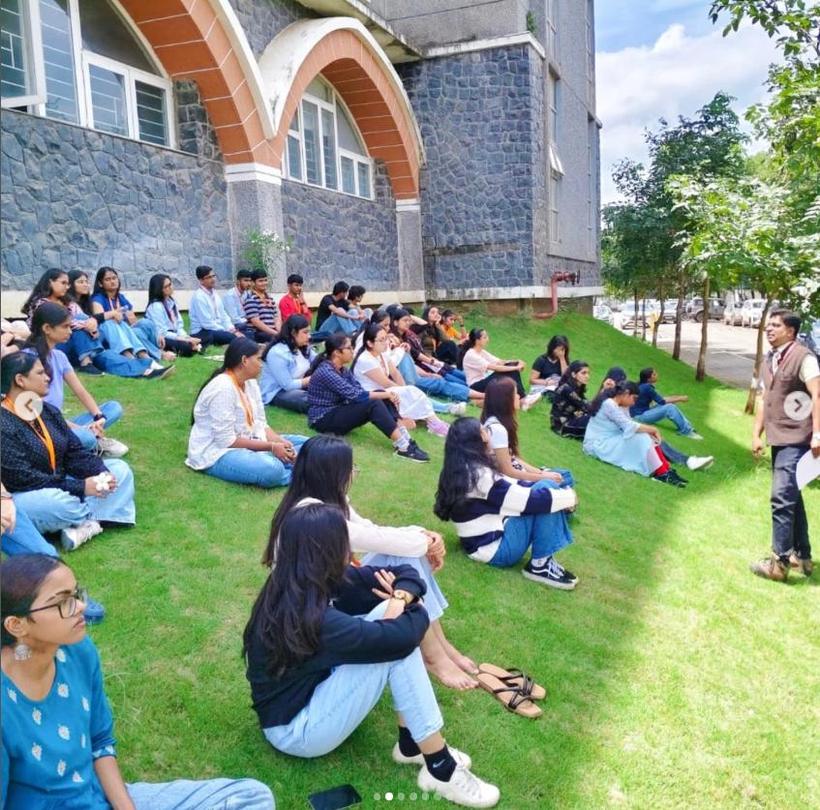
From campus lawns and amphitheatres to lecture halls and retreats, the work lives in dialogue — with students, leaders and seekers across India.
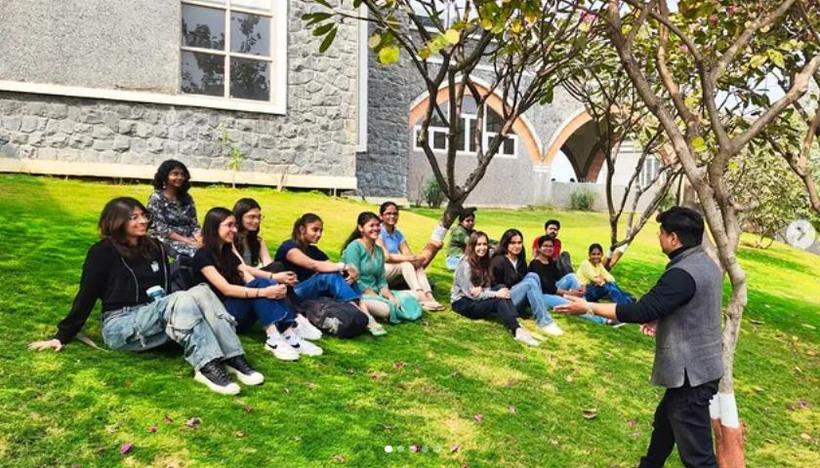
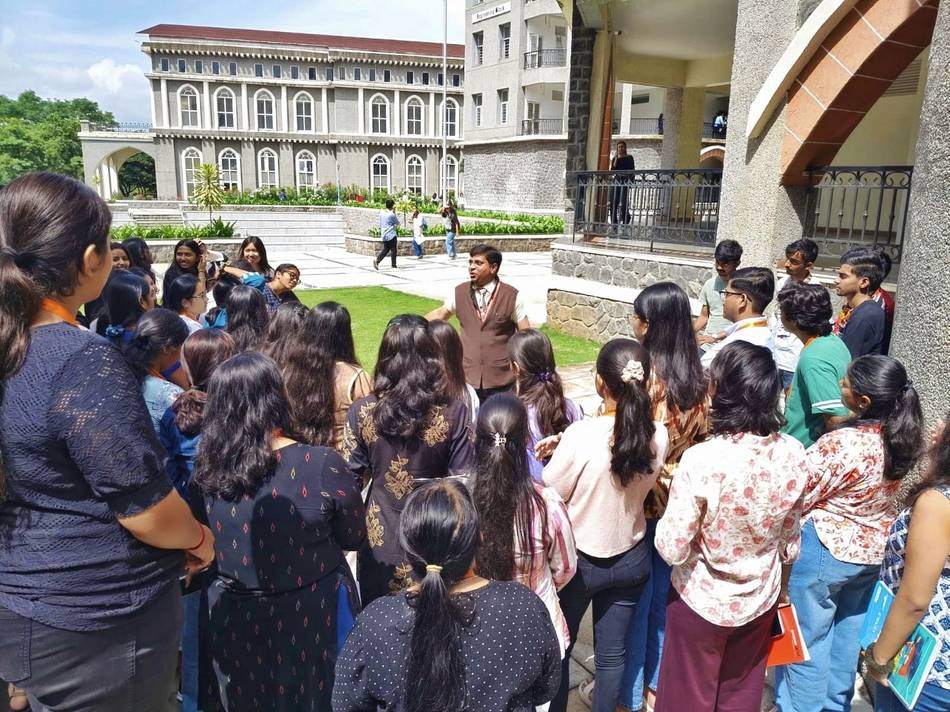
Doctoral inquiry, co-authored research, policy contribution and curriculum design — building an academic foundation beneath an integrative vision of wellness and education.
Ongoing doctoral research at the intersection of skill development, yoga and human potential.
Co-authored with Padma Shri Dr. C.S. Pandav, contributing to the evidence base for integrative wellness.
Supporting national public-health and nutrition initiatives (ICCIDD) engaging AIIMS, WHO and allied bodies.
Former research volunteer with the Stop-Diabetes Programme (MNB), Ministry of AYUSH, Government of India.
Member, Board of Studies, Faculty of Wellness; Nodal Officer for Wellness Courses, shaping next-generation programmes.
Consultant and curriculum developer for mindfulness, life-skills, peace studies and holistic/integrative health.

Each framework distils years of cross-disciplinary work into a teachable, repeatable system — the architecture that elevates teaching into thought leadership.
An eight-dimensional architecture for whole-person wellness — body, breath, mind, emotion, energy, relationships, purpose and the transcendent.
Leading from awareness — a path from ego-driven performance to purpose-led, ethical and regenerative leadership.
A teaching method weaving contemplative practice into academic learning, so curriculum forms character as well as competence.
A translation system rendering yogic and Vedantic insight into language and tools today's professionals and students can apply.
मनःप्रशमनोपायो योग इत्यभिधीयते ॥
Yoga is the art of stilling the mind — and a still mind sees clearly.— On the inner science of wellness
From university convocations and induction ceremonies to corporate cohorts, schools and wellness retreats, Prof. Bharadwaj delivers keynotes and immersive workshops that blend rigorous insight with lived contemplative practice.

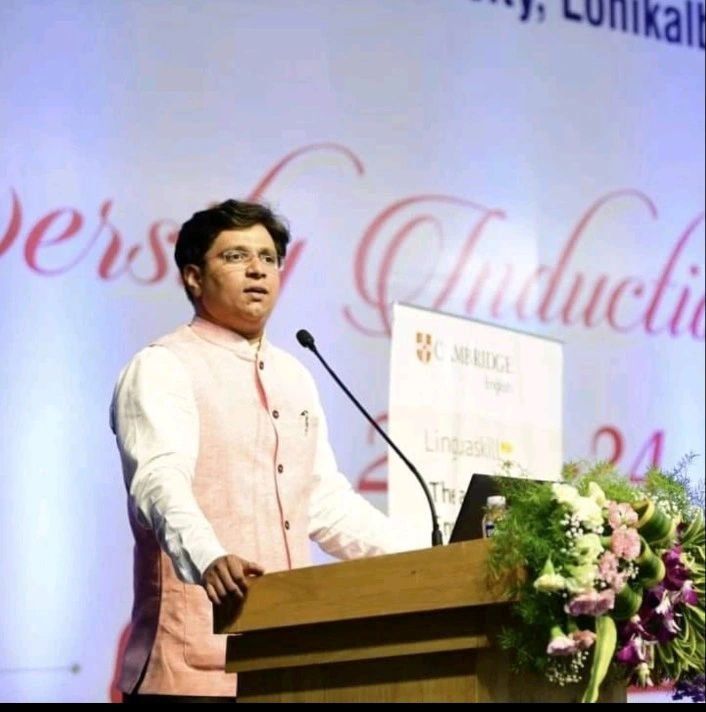
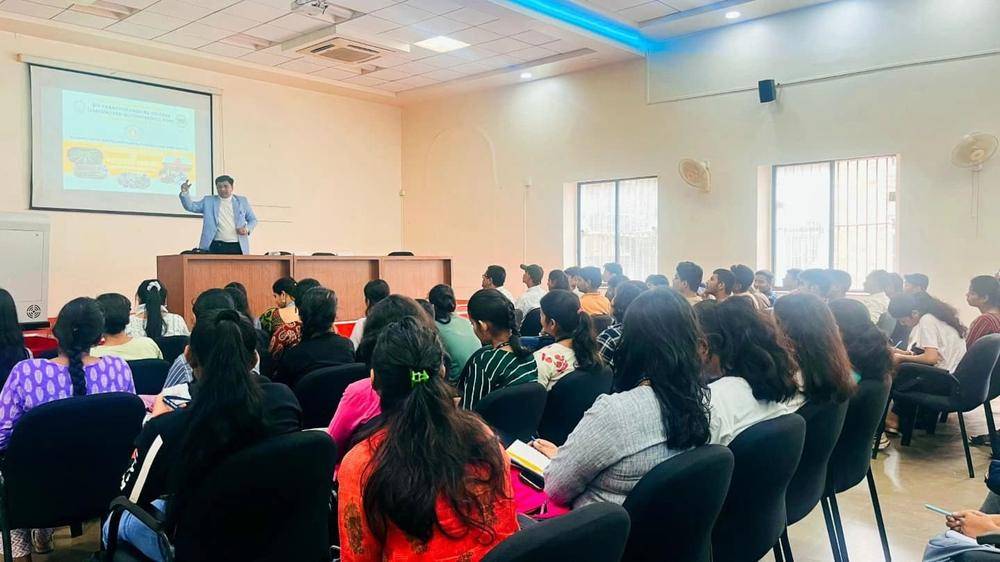
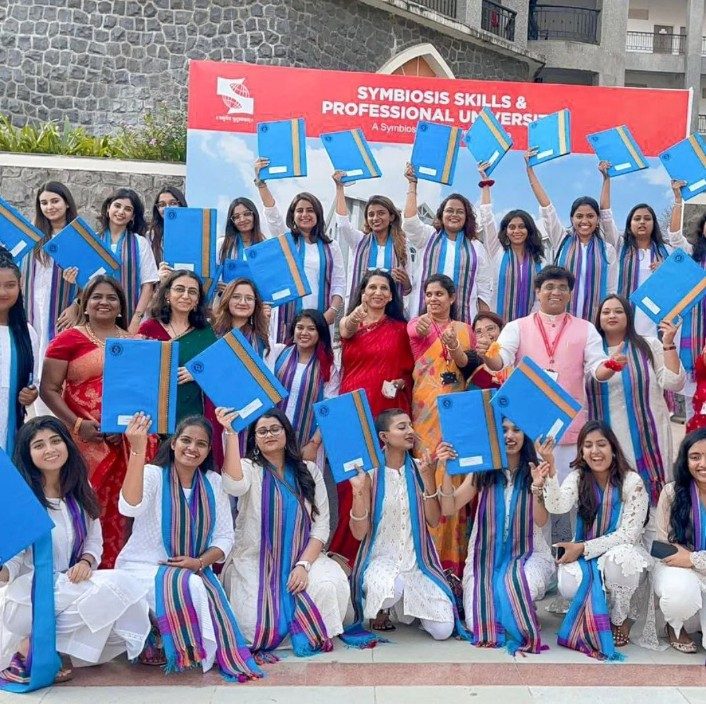
Why the future of learning must cultivate consciousness, not just content.
An immersive practice in presence, clarity and regenerative leadership.
Translating yogic and Vedantic science into daily professional practice.
Theatre artist · Hindustani classical musician · multi-instrumentalist · social worker · lifelong learner.
Two decades of teaching taught me something that changed how I advise: the design is usually sound. What is rarely assessed is whether the human conditions for adoption exist — belief, trust, relevance, capability and continuity.
Most strategy is designed on the visible layer — systems, processes, policies, targets. That layer is necessary, and it is not where most strategies fail. They fail on human ground: where people do not believe the plan is for them, do not trust the institution delivering it, or cannot see themselves in the outcome.
Select any dimension on the right to see the visible consequences it tends to influence. These are conceptual relationships drawn from practice and research — patterns worth investigating in a specific institution, not universal causal laws.
“Visible systems produce visible outcomes. Invisible human systems decide how those systems are experienced, adopted and sustained.”
The Bharadwaj Principle“A policy may be sound. But will people trust it? A strategy may be brilliant. But will people carry it?”
On Adoption“A roadmap without human alignment is only a document.”
On ImplementationA structured way of reading any institution, programme or transformation. Ten questions, asked in sequence, that surface why a system produces the outcomes it produces — and what would have to change for it to produce different ones.
Who is actually experiencing this system, and what is it like from where they stand?
Why does it exist — and is that purpose shared, or held only at the top?
How is it understood inside the institution, as opposed to how it is described in documents?
What actually drives behaviour here — incentive, fear, aspiration, identity or habit?
Who influences whom, and which relationships decide whether anything gets implemented?
What norms shape action when nobody is enforcing the rule?
What assumptions govern decisions — including the ones nobody says aloud?
What is creating momentum, and what is quietly creating resistance?
What structures, processes and incentives reinforce the current behaviour?
What becomes visible as a result — and is it what anyone intended?
People rarely act on facts alone. They act through interpretation — shaped by identity, prior experience, belief, emotion, social norm and perceived meaning. Understanding that chain is what makes an intervention land rather than merely be announced.
This lens is used for ethical influence — building trust, relevance and genuine understanding. It is never used for covert persuasion, deception or the exploitation of vulnerability.
Technical intelligence tells us what can be done. Emotional intelligence helps us understand how people feel. A third question is asked far less often: whether what we are doing is aligned with purpose, values, human wellbeing and the larger system we belong to.
A proposed conceptual construct — not an established scientific measure — describing the capacity to bring awareness, purpose, meaning, interconnectedness, ethical discernment and conscious choice into strategic and organisational life.
Yogic philosophy offers behavioural and philosophical lenses that translate unusually well into institutional life. I use them as ways of seeing — not as claims that yoga explains organisational phenomena.
Living systems have solved problems of resilience, adaptation and regeneration over a very long time. Used as a systemic and metaphorical lens — not a scientific claim — they suggest useful design principles for institutions.
Soft power is not a persuasion technique. It is the state of being worthy of trust, attention, affinity and voluntary alignment — so that people choose you without being compelled to. It is built from culture, knowledge, values, education, wellbeing, experience, relationships and reputation. Slow to build, quick to lose, and almost never owned by a single department.
Strategic influence is most durable when an institution’s values, identity and narrative occupy a positive, trusted and memorable place in people’s minds — voluntarily. This is what that journey looks like.
No presence in the mind at all. Most institutions overestimate how far past this stage they are.
The name is known. Nothing meaningful is attached to it yet.
Consistency over time has produced the assumption of good faith.
Something specific and distinctive is attached to the name.
People would feel a real loss if it disappeared.
People carry it into their own conversations, unprompted and unpaid.
The ten dimensions of the Soft Power Audit — a proprietary diagnostic concept currently in development.
These are not seven separate practices. They are seven expressions of one thing — understanding human systems, and activating the advantage hidden inside them.
The culture, trust, leadership and stakeholder alignment that decide whether an institution can change at all.
Institutions rarely fail for lack of a plan. They fail because the plan meets a culture, a set of relationships and a history that nobody surveyed first.
Reputation is produced by experience and left to marketing. Understanding the real basis of choice is the work.
Every institution can describe its curriculum. Far fewer can answer whether the graduate got and kept meaningful work — and whether the programme caused it.
Wellbeing programmes are usually run as an initiative and experienced as an announcement. Designed properly, they attach to retention, attrition and participation.
Public programmes rarely fail on design. They fail on convergence, on trust at the last mile, and on the absence of honest measurement.
Commitments are made at the top and rarely translate into anything a person does differently on an ordinary Tuesday.
Foresight is only useful when an institution has the internal capability to act on what it sees.
The questions stay constant. The language, the constraints and the definition of value do not.
Public programmes rarely fail on design. They fail on convergence, on trust at the last mile, and on the absence of honest measurement. Where evidence is missing, I say so and propose how to collect it — rather than reporting activity as though it were outcome.
My home ground, and where I am most direct. Every institution can describe its curriculum. Far fewer can answer the harder question: did the graduate get and keep meaningful work, and did we cause that?
Most corporate transformation is well planned and under-adopted. The plan is not usually the problem — the conditions for people to take it up are, and those are almost never assessed before launch. On the CSR side, independent impact assessment of skilling and empowerment programmes is where I am strongest.
Institutional wellbeing is usually run as a programme and experienced as an announcement. I treat it as an outcome question — attached to retention, attrition, participation and institutional risk — and design it to be measured accordingly.
Advisory work on wellbeing architecture and programme design. Not clinical, diagnostic or therapeutic practice, and no health outcomes are claimed.
Climate action is ultimately decided by human values, perception, behaviour, institutions and collective participation. My contribution is on that side of the problem — working alongside technical specialists, not in place of them.
I am not a climate scientist and do not offer technical, regulatory or carbon-accounting services. This work is delivered with qualified technical partners.
Insight that does not become a sequence of decisions is only interesting. Choose a domain to see how the same architecture applies across very different problems.
Illustrative only. These are structural examples of how a roadmap is built — not findings about any actual client or institution. Every real engagement begins with diagnosis.
Engagements are scoped to the problem, not sold by the hour. Commercial terms are discussed privately once scope, stakeholders, duration and expected value are clear.
Human connection infrastructure for a more capable, connected and conscious society.
People are rarely short of potential. They are short of connection — to capability, to opportunity, to institutions, to relationships and to purpose. Systems built to help them are often built around them instead.
HumanKind explores a different premise: that the person a programme is designed to help should end it as a participant and a contributor, not as a beneficiary.
HumanKind is currently a concept in development. It is not an operating programme, and it carries no governmental adoption, sanction, funding or endorsement. Any pilot referenced in discussion is a proposal under consideration, described as such.
Advisory roadmaps can be designed so that institutional and district-level effort connects to broader national development priorities rather than running parallel to them.
This describes strategic alignment of independent advisory work with publicly stated national aspirations. It does not indicate appointment, empanelment, sanction, association with or endorsement by any government body.
Education, skills and employability.
Capability, participation and leadership.
Healthy people, resilient institutions.
The ability to deliver — and to evidence delivery.
Select a goal to see where the advisory work is genuinely relevant to it.
Select a goal above.
Strategic alignment only. This does not indicate accreditation by, partnership with, or endorsement from the United Nations or any of its agencies.
I did not spend these years selling consulting. I spent them doing the work consultants are usually hired to advise about — building programmes, running them inside institutions, and then asking whether they had actually changed anything.
That vantage point produced the observation this practice is built on: apparently unrelated failures share a common cause. The design is usually sound. What is rarely assessed is whether the human conditions for adoption exist.
Early advisory contributions, knowledge sharing and professional collaborations — small in scale, relationship-driven, undertaken alongside teaching and research rather than as a separate business.
A widening range of work across teaching, programme building, wellness practice and entrepreneurship education.
Deeper involvement in institutional initiatives, curriculum work and projects spanning more than one domain at a time — including public-health and nutrition work alongside Padma Shri Dr. C. S. Pandav.
The recognition that apparently different problems — a curriculum, a wellness programme, a skilling cohort — were failing for the same underlying human reasons.
Doctoral research into skill development and human potential, and the development of a distinctive advisory lens combining strategy with human systems, wellbeing, consciousness and influence.
Formalising this into an independent multidisciplinary strategic advisory practice, in response to growing demand for more human-centred and integrated forms of advisory work.
Keynote Address Dialogue Under the Trees
 Reflective CirclesUniversity Induction
 Open-Air Amphitheatre
 Open-Air TeachingIn the Lecture Hall
For keynotes, workshops, research collaboration, consulting or curriculum design — reach out, and let's explore how we might create transformation together.